Acne during adolescence and young adulthood is a source of embarrassment and self-consciousness. Sadly for some, acne leaves behind unsightly scars to serve as a painful reminder of this difficult time in your life.
Approximately 95% of acne patients develop some degree of scarring, and genetics has a significant impact on their severity. Asian and Hispanic acne sufferers tend to have more severe acne and more severe acne scarring. Acne scar severity is subjective. Although some may tell you, “It’s not that bad,” only you know how you feel about your appearance.
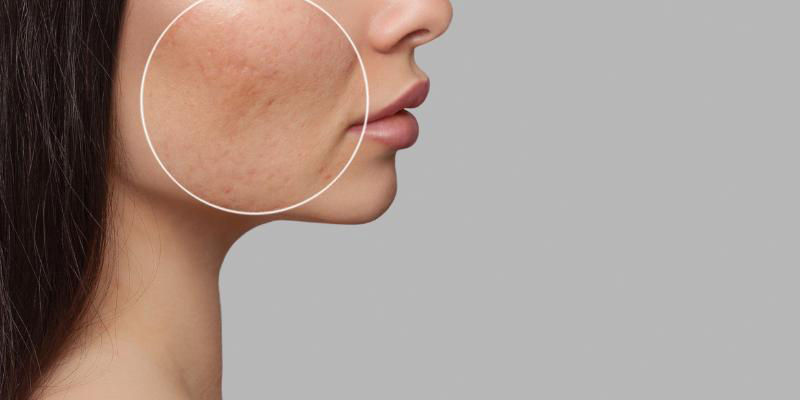
In situations where the scars are more pronounced on the face, medical treatment is required to help smooth the skin surface. Time is not a friend. Older acne scars are more resistant to treatment. Although there may be some minimal softening over the years without treatment, acne scars don’t just go away on their own.
Acne scar treatments are based on many factors, and not one treatment type is suitable for everyone. You can learn about which acne scar treatment options would be most appropriate for your skin by speaking with Dr. Fitzgerald, one of our other dermatologists, or a team leader in person. A professional consultation provides an education on what procedures would be most appropriate for your skin and why.
Indented acne scarring is a direct result of tissue loss that occurs with infected acne or from repeated “picking” at these lesions. There are essentially three different types of acne scars:
Because acneic skin tends to be sensitive, it’s usually more prone to generalized redness. Redness may respond well to intense pulsed light (IPL) therapy to seal up the tiny broken vessels that create this redness. More obvious redness may require a vascular laser.
The only way to change the appearance of indented acne scars permanently is to promote collagen growth and/or by “planing” the skin surface. While acne scar lasers utilizing fractional energy provide the most effective results with the least amount of downtime, you have many options when seeking to treat acne scars.
Depending on your unique individual needs, Dr. Fitzgerald may recommend one or more of the following acne scar treatments:
Choosing the right treatment for you ensures the outcomes are tailored to your skincare goals, and our team can lead you in the right direction.
You likely have questions about acne scar treatment before diving into any procedures, and Dr. Rebecca Fitzgerald’s center for excellence has the answers for you. Please contact Dr. Rebecca Fitzgerald today to schedule your acne scar treatment consultation.
Acne scars can be minimized, but never completely removed. Sometimes, severe scars can be removed with excision or punch biopsy, but you still end up with a scar.
A combination of lasers/devices, procedures like subcision (which helps lift the scar floor), combined with appropriate skin care, is the best way to smooth the skin surface.
Boxcar, ice pick, rolling scars, and keloids or hypertrophic scars.
Controlling acne with topical Rx or oral medications, sunblock to prevent/reduce post-inflammatory pigment. Waiting to “outgrow” acne is a mistake and increases the risk of scarring that can last a lifetime.
Some OTC creams can help with red/brown pigment, OTC retinol can improve texture, and OTC silicone products can help with raised/hypertrophic scars. Consistency is key. Scars that demonstrate depth indicate destruction of tissue and can only be improved with laser or microneedling, or in some cases, deeper peels.
Acne scar treatments are usually well-tolerated with a topical numbing cream applied before the procedure. Downtime depends on the type of treatment and how aggressively the scars are treated.
Results can take up to 6-8 weeks to see improvement and usually require several treatments for the best results. Results are cumulative, with each treatment session offering additional improvements.
Insurance providers typically do not cover treatment for scars as they are considered a cosmetic issue.
Picking at pimples, which can lead to inflammation and infection, sun exposure, and collagen loss that occurs with the aging process. Scars are more successfully treated earlier.
Treatments are tailored to the type of scars, patient skin type, acceptable downtime with procedure, and level of desired improvement.